Factorial experiment Wikipedia
Table Of Content
It could be, for example, that people who are lower in SES tend to be more religious and that it is their greater religiosity that causes them to be more generous. Or it could be that people who are lower in SES tend to come from certain ethnic groups that emphasize generosity more than other ethnic groups. The researchers dealt with these potential third variables, however, by measuring them and including them in their statistical analyses.
What is a full factorial and fractional factorial design?
Statistical approach on the inter-yarn friction behavior of the dual-phase STF/ρ-Aramid impregnated fabrics via factorial ... - ScienceDirect.com
Statistical approach on the inter-yarn friction behavior of the dual-phase STF/ρ-Aramid impregnated fabrics via factorial ....
Posted: Sat, 29 Jul 2023 14:13:26 GMT [source]
These different formats can make the data look different, even though the pattern in the data is the same. An important skill to develop is the ability to identify the patterns in the data, regardless of the format they are presented in. Some examples of bar and line graphs are presented in the margin, and two example tables are presented below.
5.1. Correlational Studies With Factorial Designs
Investigators may wish to adjust ICs to enhance their compatibility with other components. For instance, investigators might choose to reduce the burden of an IC by cutting sessions or contact times. This might reduce the meaning of the factor because it might make the IC unnecessarily ineffective or unrepresentative. From this table, we can see that there is positive correlation for factors A and C, meaning that more sleep and more studying leads to a better test grade in the class. Factor B, however, has a negative effect, which means that spending time with your significant other leads to a worse test score. The lesson here, therefore, is to spend more time sleeping and studying, and less time with your boyfriend or girlfriend.
Lesson 5: Introduction to Factorial Designs
This applies even to scenarios where a main effect and an interaction are present. The research designs we have considered so far have been simple—focusing on a question about one variable or about a relationship between two variables. In this chapter, we look closely at how and why researchers use factorial designs, which are experiments that include more than one independent variable. Factorial designs require the experimenter to manipulate at least two independent variables.
1. Multiple Dependent Variables
The examples discussed in this section only scratch the surface of how researchers use complex correlational research to explore possible causal relationships among variables. It is important to keep in mind, however, that purely correlational approaches cannot unambiguously establish that one variable causes another. The best they can do is show patterns of relationships that are consistent with some causal interpretations and inconsistent with others. The example in Figure 5.15 shows a case in which it is probably a bit more straightforward to interpret both the main effects and the interaction.
3.7. Interactions
Can you use a t-test instead of an ANOVA in a multi-factorial design if you're interested in only one comparison? - ResearchGate
Can you use a t-test instead of an ANOVA in a multi-factorial design if you're interested in only one comparison?.
Posted: Tue, 26 Feb 2019 08:00:00 GMT [source]
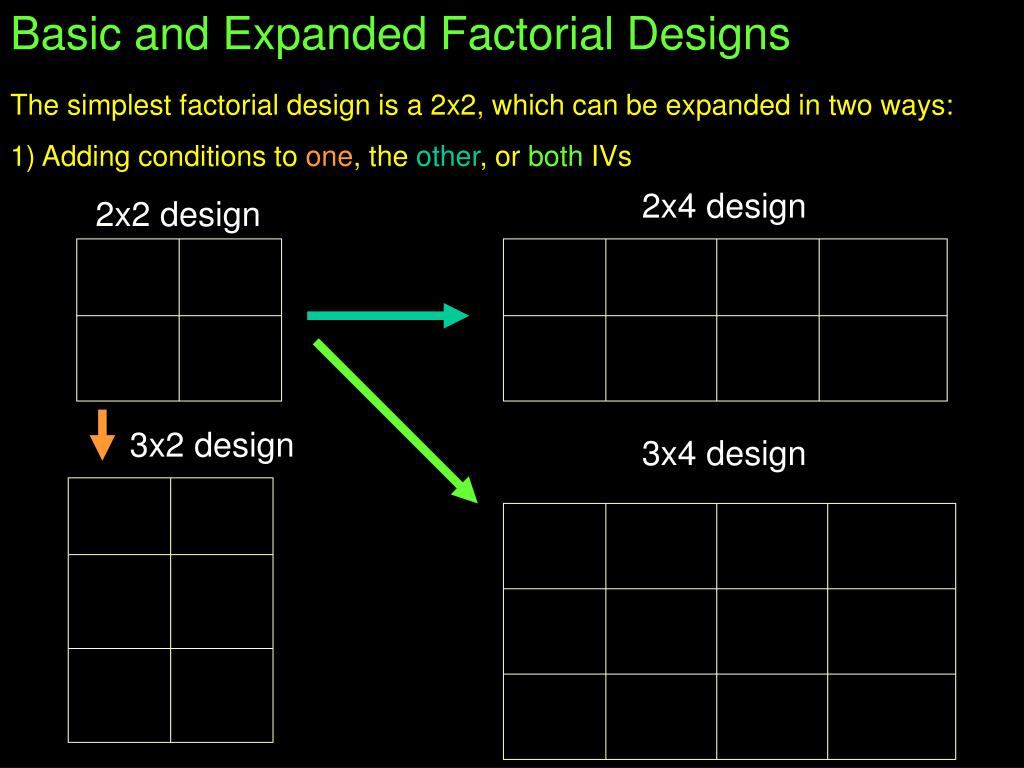
This is because, as noted earlier, such effects are determined by averaging over the other component effects (with effect coding). For the vast majority of factorial experiments, each factor has only two levels. For example, with two factors each taking two levels, a factorial experiment would have four treatment combinations in total, and is usually called a 2×2 factorial design. In such a design, the interaction between the variables is often the most important.
Examples of these plots can be found in the Minitab Example for Centrifugal Contactor Analysis. The alpha value, which determines the limit of statistical significance, can be chosen in this menu also. A common one to select is "Residuals versus fits" which shows how the variance between the predicted values from the model and the actual values.
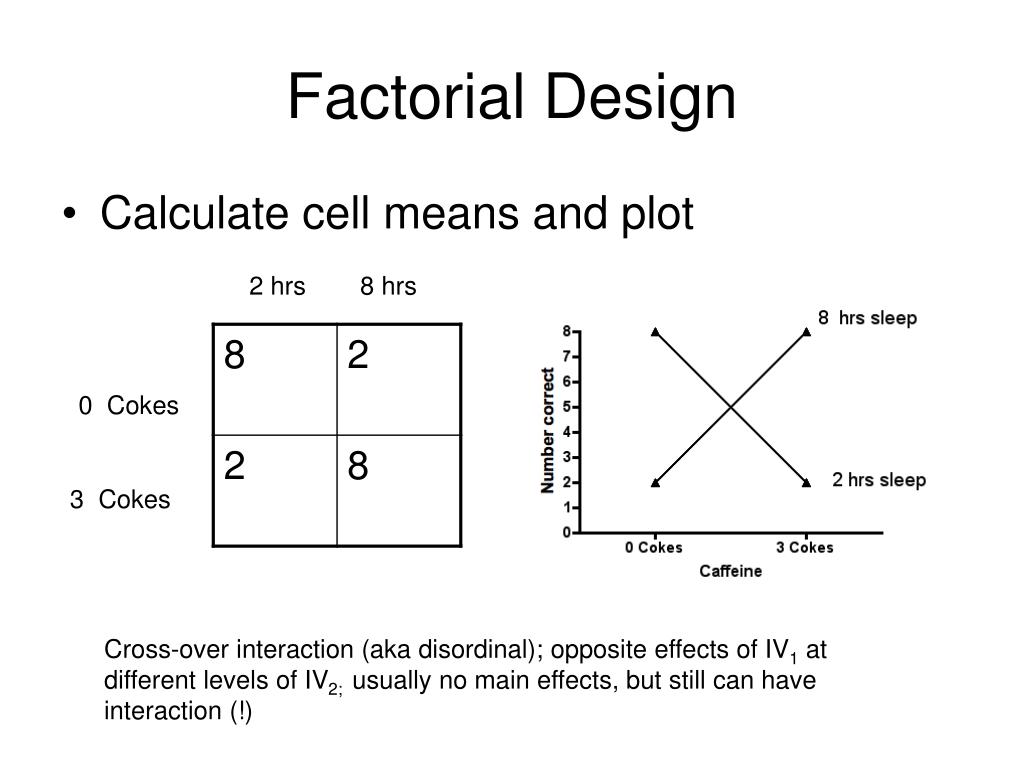
To briefly add to the confusion, or perhaps to illustrate why these two concepts can be confusing, we will look at the eight possible outcomes that could occur in a 2x2 factorial experiment. We have usually no knowledge that any one factor will exert its effects independently of all others that can be varied, or that its effects are particularly simply related to variations in these other factors. From this one can see that there is an interaction effect since the lines cross. One cannot discuss the results without speaking about both the type of fertilizer and the amount of water used. Using fertilizer A and 500 mL of water resulted in the largest plant, while fertilizer A and 350 mL gave the smallest plant.
Privileging Main Effects
This may lead us to want to know how to make people better at ignoring distracting things. Our first stab at science found that distraction affected paying attention, but we want to expand on that finding. Maybe now we want to know what makes people worse at ignoring things? In other words, we want to find out what other IVs might affect the size of the distraction effect (make it bigger or smaller, or even flip around!). If our distraction manipulation is super-distracting, then what should we expect to find when we compare spot-the-difference performance between the no-distraction and distraction conditions?
You also notice that age does not play a role; both 20 and 40 year olds suffer the same percentage of seizures for a given amount of CureAll. From this information, you can conclude that the chance of a patient suffering a seizure is minimized at lower dosages of the drug (5 mg). The second graph illustrates that with increased drug dosage there is an increased percentage of seizures, while the first graph illustrates that with increased age there is no change in the percentage of seizures.
Remember, “independent variables” are manipulated independently from the measured variable. Specifically, the levels of any independent variable do not change because we take measurements. Instead, the experimenter changes the levels of the independent variable and then observes possible changes in the measures. When multiple dependent variables are different measures of the same construct - especially if they are measured on the same scale - researchers have the option of combining them into a single measure of that construct.
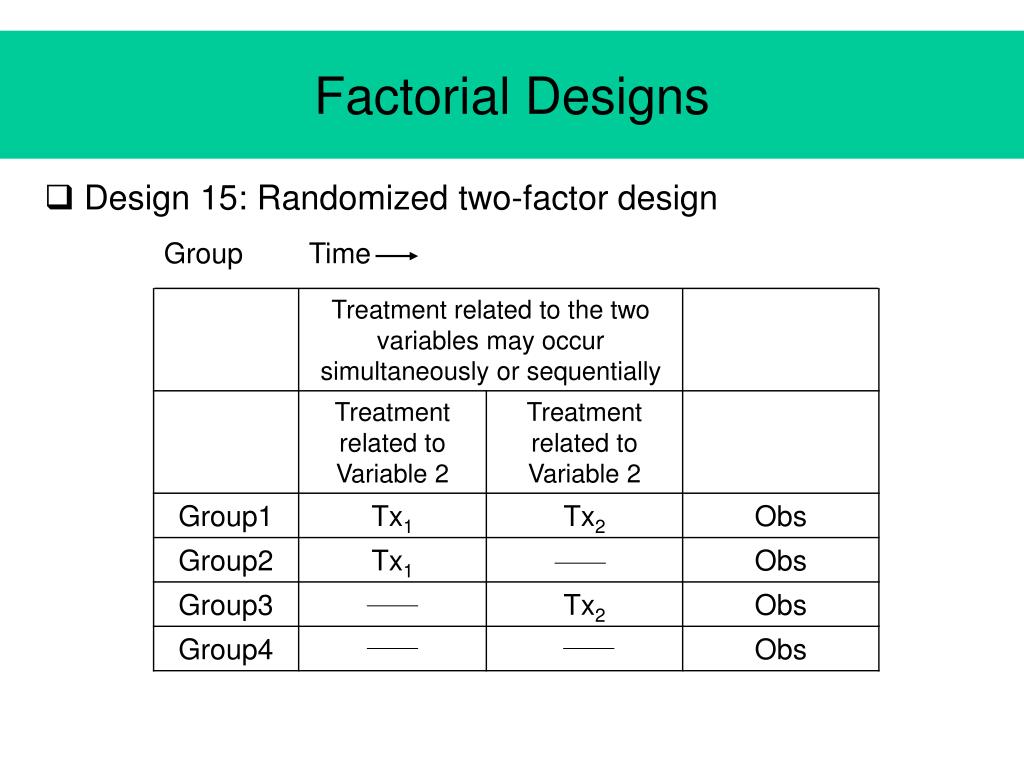
Such an experiment allows the investigator to study the effect of each factor on the response variable, as well as the effects of interactions between factors on the response variable. Another common approach to including multiple dependent variables is to operationalize and measure the same construct, or closely related ones, in different ways. Imagine, for example, that a researcher conducts an experiment on the effect of daily exercise on stress. The dependent variable, stress, is a construct that can be operationalized in different ways.
Or help my partner focus on the intricate plot of TV show that we're watching? Or what if we found some individual differences, meaning that some people get distracted easier than other people? You were the kind of person who had a small distraction effect (maybe you find 10 differences when you are not distracted, and 9 differences when you are distracted), that could mean you are very good at ignoring distracting things while you are paying attention. Each of the inferential statistical analyses that we've covered is to compare means (quantitative variable) between different groups. The qualitative variable is the two different samples or an IV with two or more levels. With t-tests, with compared two different groups (which can be considered one IV with two levels).
If our manipulation works, then we should find that people find more differences when they are not distracted, and less differences when they are distracted. Factorial designs are the basis for another important principle besides blocking - examining several factors simultaneously. We will start by looking at just two factors and then generalize to more than two factors. Investigating multiple factors in the same design automatically gives us replication for each of the factors. Make plots to determine the main or interaction effects of each factor.
Importantly, the effect of the gas variable on driving depends on the levels of having a key. Or, to state it in reverse, the effect of the key variable on driving depends on the levesl of the gas variable. Except in this case, we find the average heights in the no hat vs. hat conditions by averaging over the shoe variable. To find the main effect of the shoes manipulation we want to find the mean height in the no shoes condition, and compare it to the mean height of the shoes condition.


Comments
Post a Comment